
concert review
A symphony of emotion: Worcestershire Symphony Orchestra captivates a capacity audience
Worcestershire Symphony Orchestra
Saturday, 15 November
Conductor: Keith Slade
Piano soloist: Viv McLean
Leader: Victoria Lee
Programme:
Shostakovich: Festival Overture
Tchaikovsky: Piano Concerto No. 1
Shostakovich: Symphony No. 5
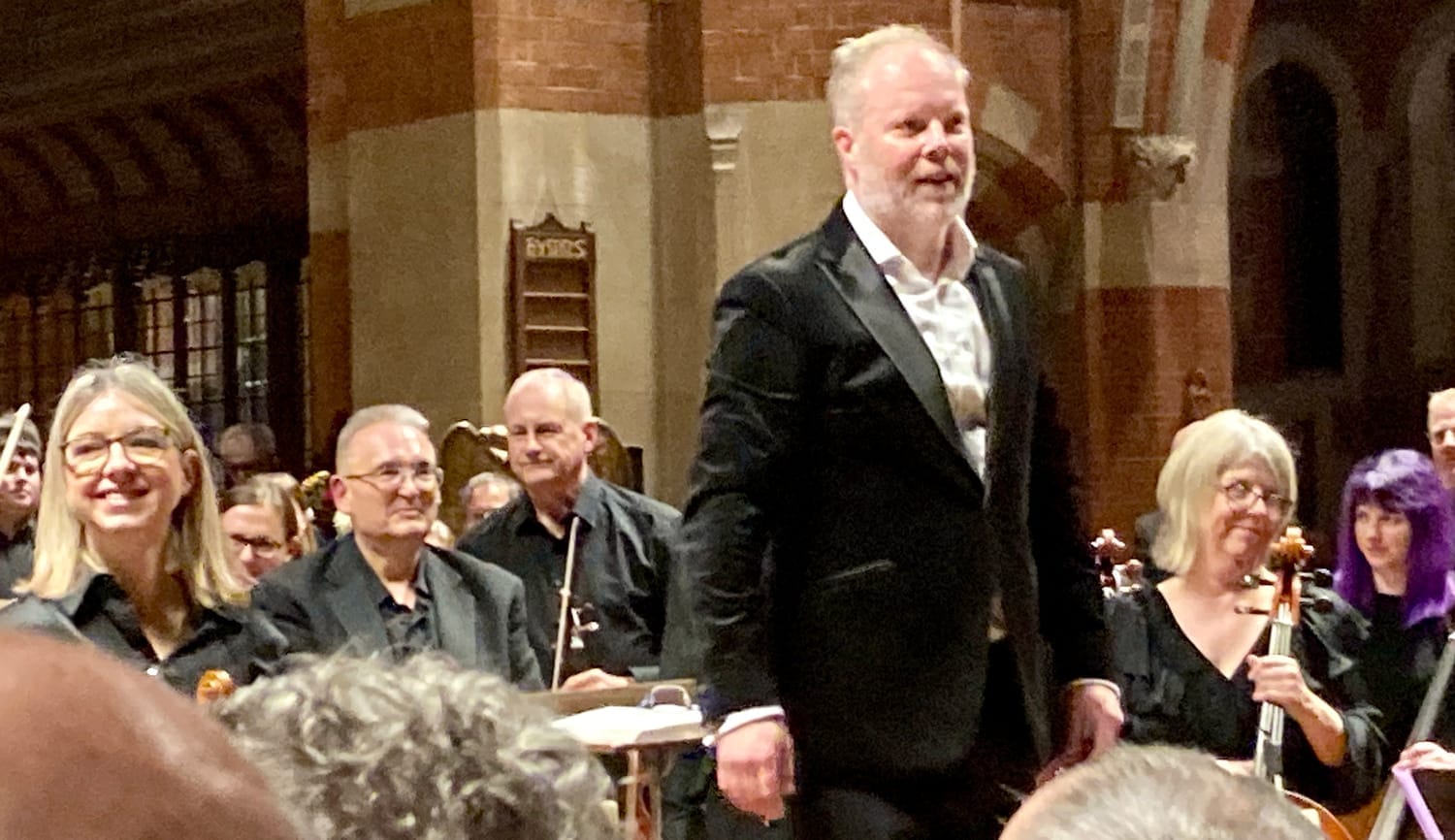
Last Saturday’s Worcestershire Symphony Orchestra concert presented a powerful programme to a packed house, expertly conducted by Keith Slade. Stretching across 80 years of Russian history, it explored contrasting emotions, ably brought to life by a committed and highly skilled ensemble.
Slade bounded onto the podium and, conducting without a score, launched the evening with an infectious enthusiasm that perfectly captured the joy evident in Shostakovich’s Festival Overture. The orchestra responded positively to his lead: trumpets blared, violins scurried, and one felt as much as heard the rumble of the deep bass drum as the sound filled the ample acoustic. It was the perfect curtain-raiser—ebullient, energetic and vibrant, a no-holds-barred celebration.
A former BBC Young Musician Woodwind finalist, orchestral player, as well as conductor of various ensembles, Slade brings a wealth of experience to his role as music director of the Worcester-based orchestra since 2010. Together, they have clocked up an impressive array of performances of major works by all the great composers as well as lighter fare.
"Slade bounded onto the podium and, conducting without a score, launched the evening with an infectious enthusiasm..."
Tchaikovsky: Piano Concerto No. 1
Tchaikovsky’s First Piano Concerto is surely one of the best known and best loved in the repertoire - for good reason.
Three times the horns shout their opening four-note figure, followed by an orchestral crash. But on the third time, the piano enters with ascending chords before the wonderfully grand main theme is taken up by the strings. McLean has a focused manner—no grimaces or histrionics, just a clear commitment to bringing the music to life.
As the music moves from its grand opening to more remote, less certain questioning passages, the notes spray off like sparks; even where there are so many notes, the outline is not obscured.
The concerto reflects many changes of emotional temperature and mood: one minute celebrating a grand triumph, the next, harmonic shifts signal uncertainty, probing and questioning before growing confidence emerges in a flurry of scintillating scales. McLean was fully on top of all these nuances and communicated them clearly, but also impressed with technical brilliance.
The 19th-century concept of the concerto as a battle between soloist and orchestra was replaced here by a tender interplay of soloist and ensemble, with frequent glances between conductor and soloist. This cooperation was most evident in the orchestral passages where the soloist held back rather than stealing the limelight, allowing the orchestra to take the lead and the piano to accompany.
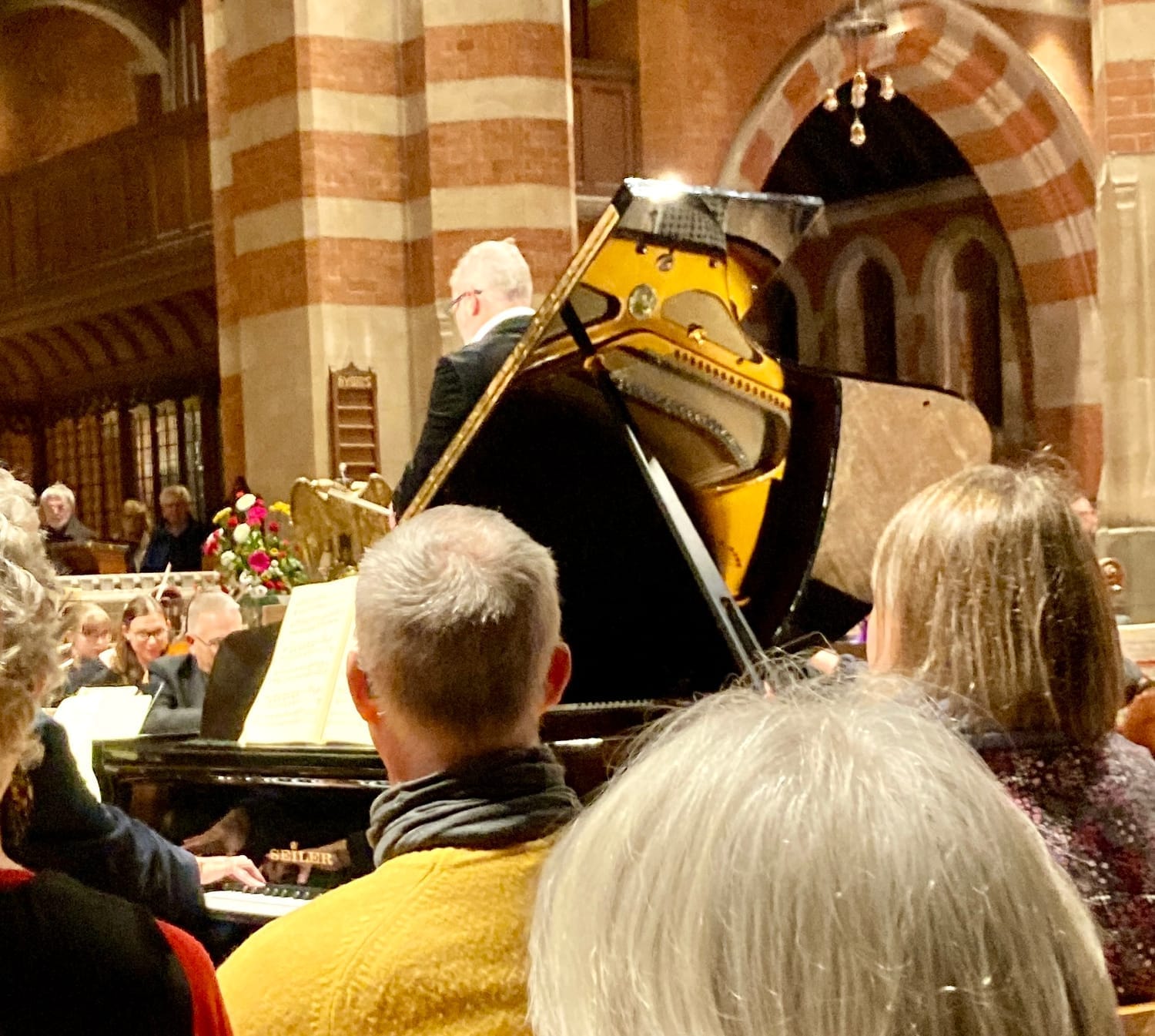
"The 19th-century concept of the concerto as a battle between soloist and orchestra was replaced here by a tender interplay of soloist and ensemble, with frequent glances between conductor and soloist."
The substantial first movement of around 20 minutes requires considerable stamina, its grand conclusion almost sounding like the end of a whole concerto as we arrive, in a cascade of notes, at the end of the first movement.
After all the drama and excitement, the mood relaxed, and the beautiful flute solo floated across the nave like a healing balm. There were other opportunities to witness fine instrumental solos, with the piano perfectly balanced throughout. This brief second movement served as a welcome interlude before the final movement shattered the peace with a whack from the percussion.
Now we were in a different emotional world. Once again there was playful interchange, full of glittering runs and scales that passed by like scenery from a high-speed train, until finally we arrived at the closing pages. There was a sense of inevitability as we moved towards the final climax and the great theme sang out.
Slade’s gestures became more fluid and grander as the orchestral sound swelled until we reached the final peroration, and here once again the piano selflessly accompanied the orchestra.
With a final upward rush of scales, we arrived at the triumphant conclusion. Hands lifted above the keyboard, the baton stilled, and the attentive audience erupted in appreciative applause.
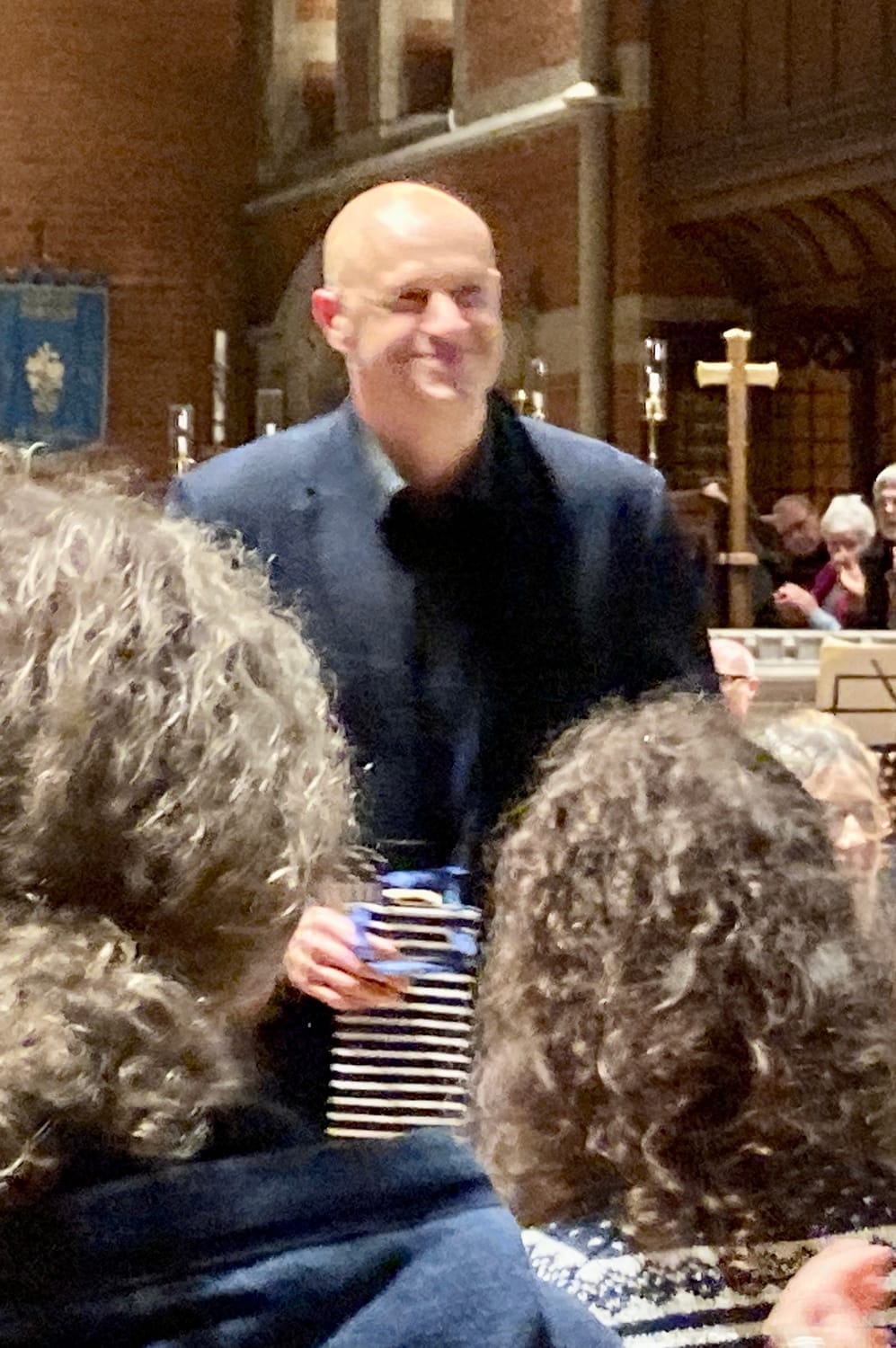
"...there was playful interchange, full of glittering runs and scales that passed by like scenery from a high-speed train..."
Shostakovich: Symphony No. 5
Under Slade's compelling direction, the orchestra delivered a gripping account of Shostakovich's Fifth Symphony that captured both the work's menace and its fragile moments of beauty.
Coming to the microphone after the interval, Slade assured us of the soloist's appreciation for such a rapt and attentive audience, thanking them for the absence of noise or distraction. Clearly an experienced communicator, Slade transitioned into a preparation for the Shostakovich symphony, a very different work. He explained that it reflects the events of 1937 when 1.5 million Russians disappeared under Stalin's purge. Slade revealed that on his score of the third movement, he had written, "desolation, loss and isolation, coupled with intense grief."
The opening movement established an atmosphere of foreboding from the first bars, with trumpets snarling menacingly in the march-like sections. The orchestra navigated the angular, unforgiving lines with precision, while exposed strings conjured icy winds of desolation. The tension built inexorably to a shattering crescendo, with the first violin emerging like a single human voice crying out against the tumult.
The second movement opened with gruff lower strings, soon answered by mocking clarinets that added a sardonic edge to the proceedings. Here, the orchestra's characterful playing brought out the movement's bitter humour.
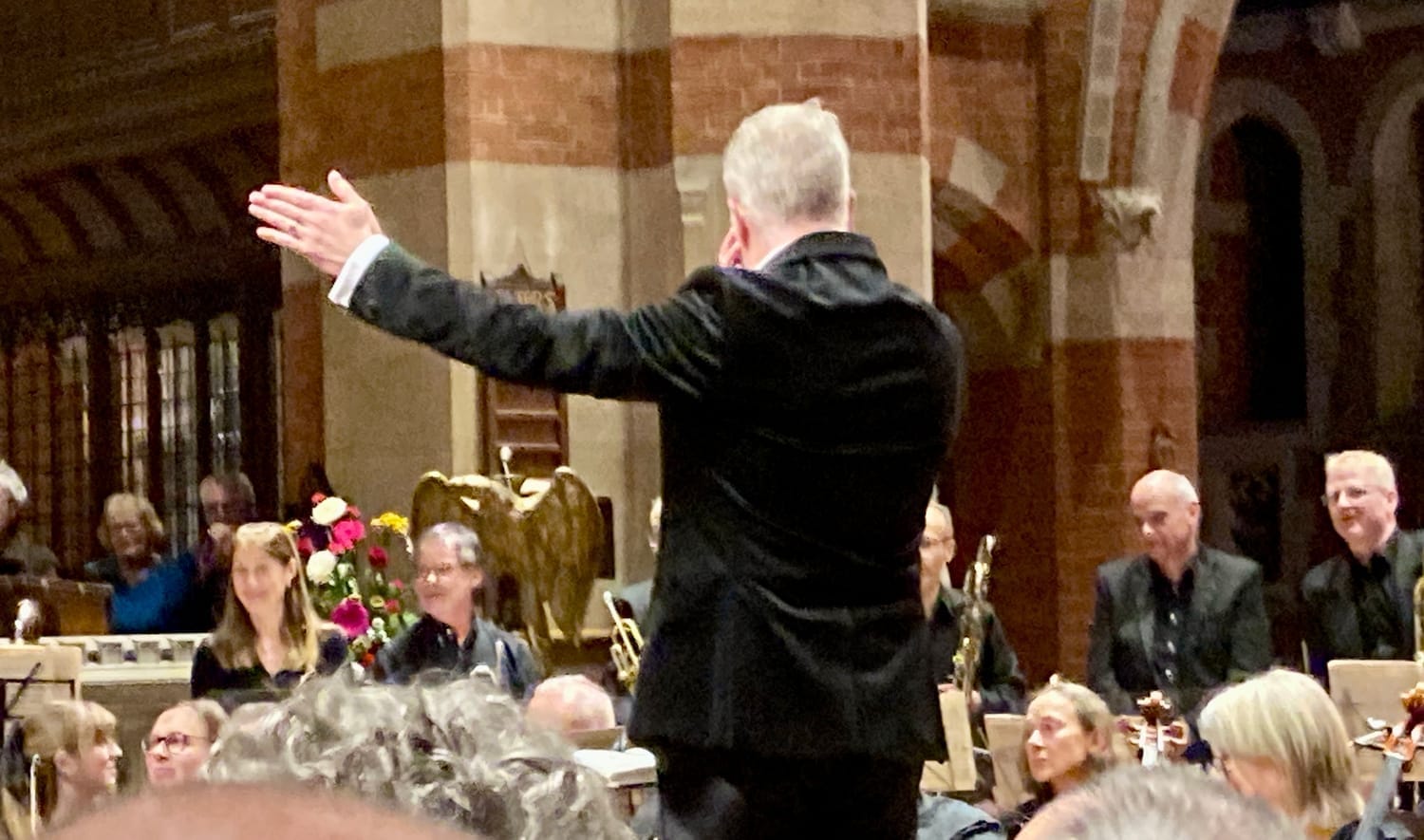
"Slade revealed that on his score of the third movement, he had written, 'desolation, loss and isolation, coupled with intense grief.'"
In the third movement, Slade's interpretive gifts were fully on display. Laying aside his baton, he sculpted and moulded phrases out of thin air, drawing from his players a strong chorus of lamentation. His outstretched left hand exhorted the strings for emphasis, while the clarinet's mellifluous tone provided moments of consolation. The movement ended with violins at pianissimo, just a tremble of vibrato dying away to nothing - a moment of breathtaking fragility.
"In the third movement, Slade's interpretive gifts were fully on display. Laying aside his baton, he sculpted and moulded phrases out of thin air, drawing from his players a strong chorus of lamentation."
The baton returned for the finale, as the orchestra accelerated into the main theme. What seemed like a hard-won theme of triumph was interrupted by timpani and brass, open smiles not lasting long in Shostakovich's complex emotional landscape.
As the final movement progressed, there were moments of great beauty. The poignant solo by leader Victoria Lee spoke of the fragility of human life as one single voice. Yet the march of the military seemed ever present, the snare drum threatening like footsteps. The percussion section, busy throughout the evening, distinguished themselves with a range of xylophone and drums. When the final triumphant ending was reached, enough of a seed of doubt had been sown to suggest that it may not have been quite as triumphant as it might at first appear. Slade's interpretation brought out these ambiguities with intelligence and sensitivity.
It is not difficult to compare the unbridled joy of the Festival Overture, written in 1954, a year after Stalin's death and perhaps reflecting a feeling of freedom that followed in its wake, with the darker, more complex emotions of the Fifth Symphony.
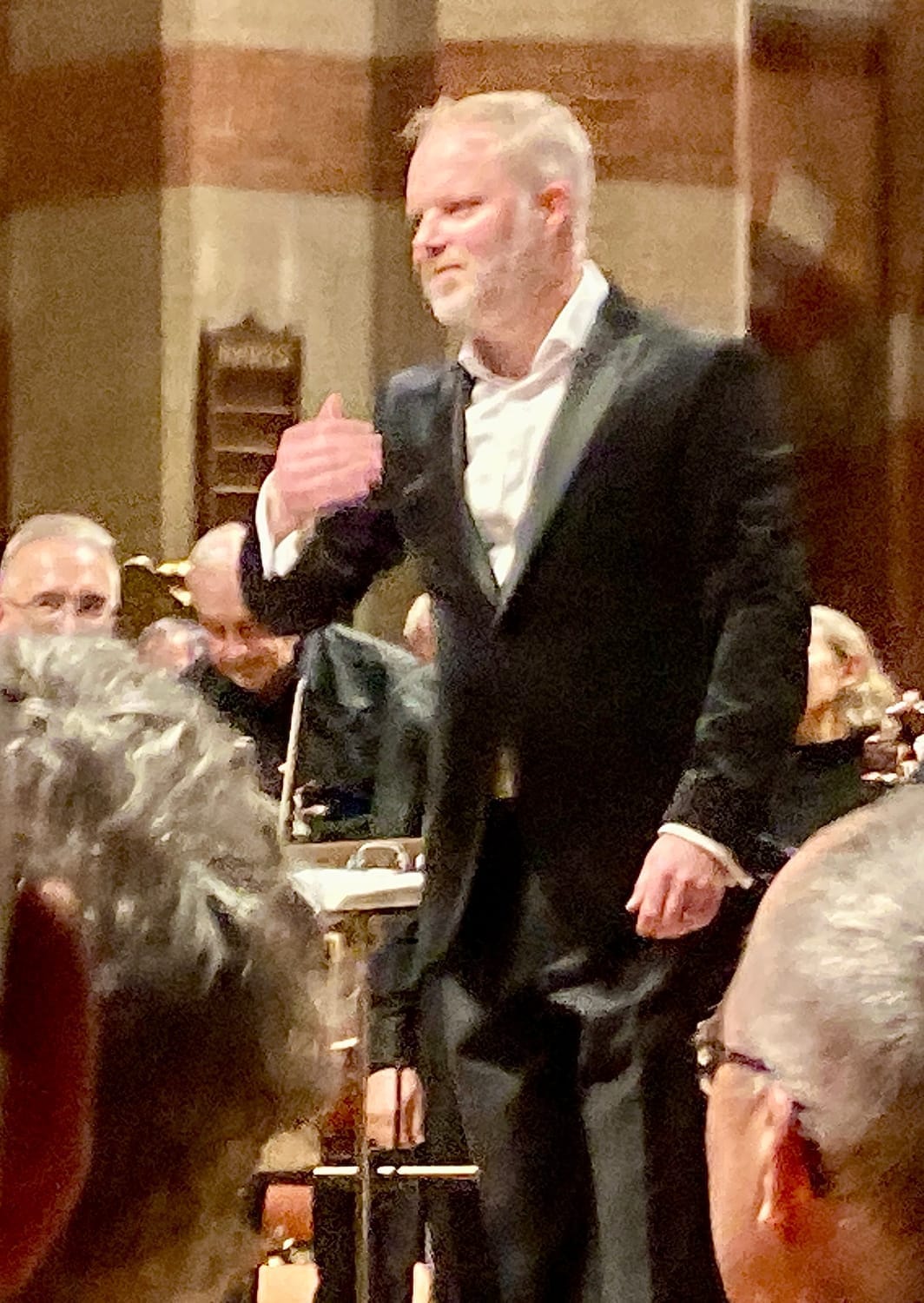
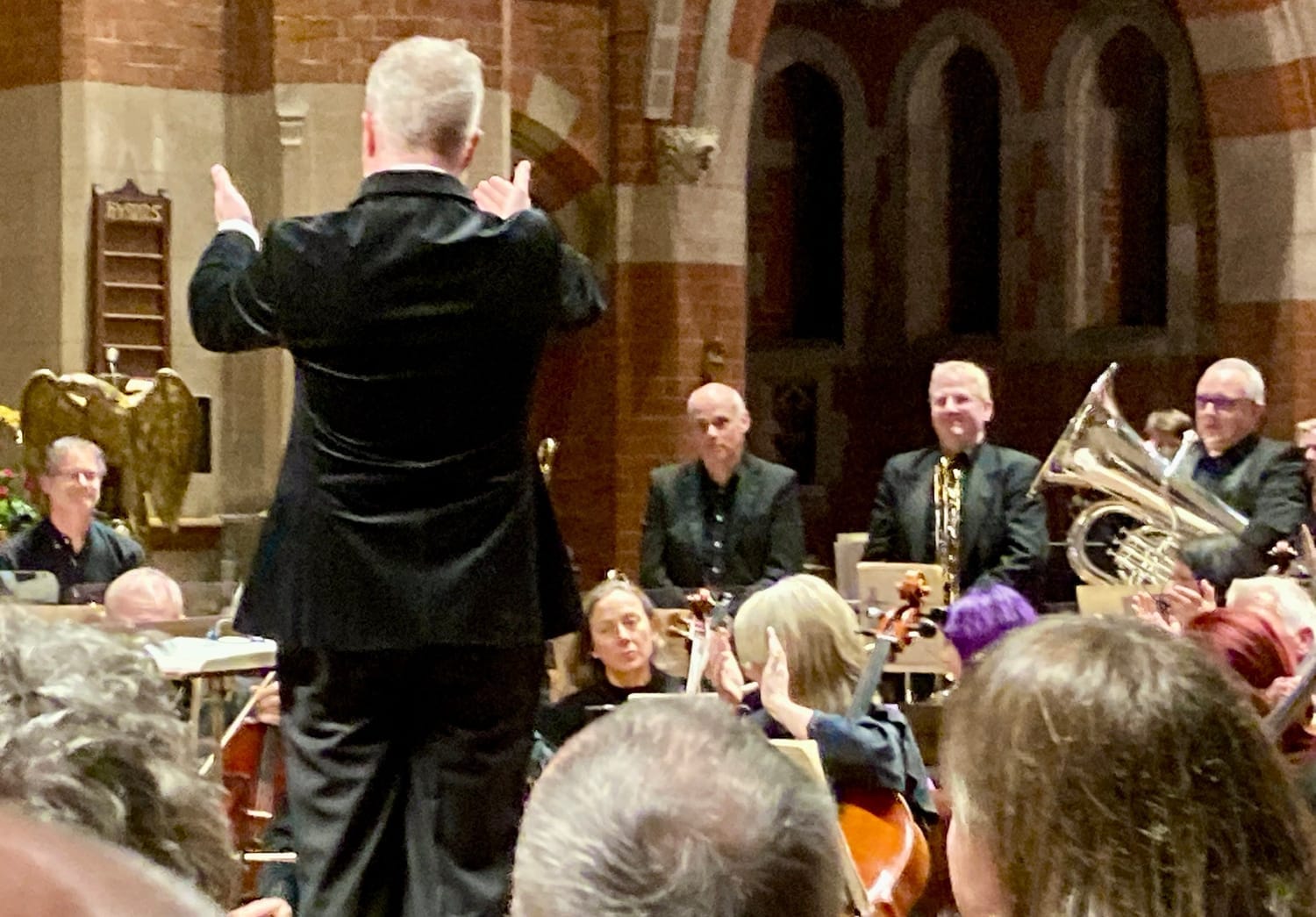
Applause was enthusiastic and prolonged as Slade repeatedly returned to the front, bringing his players to their feet and encouraging the capacity audience to acknowledge their tremendous achievement. Taking the microphone once again, Slade congratulated the audience on their attentiveness and reminded them that a great performance only exists when orchestra and audience are together in an act of focused concentration.
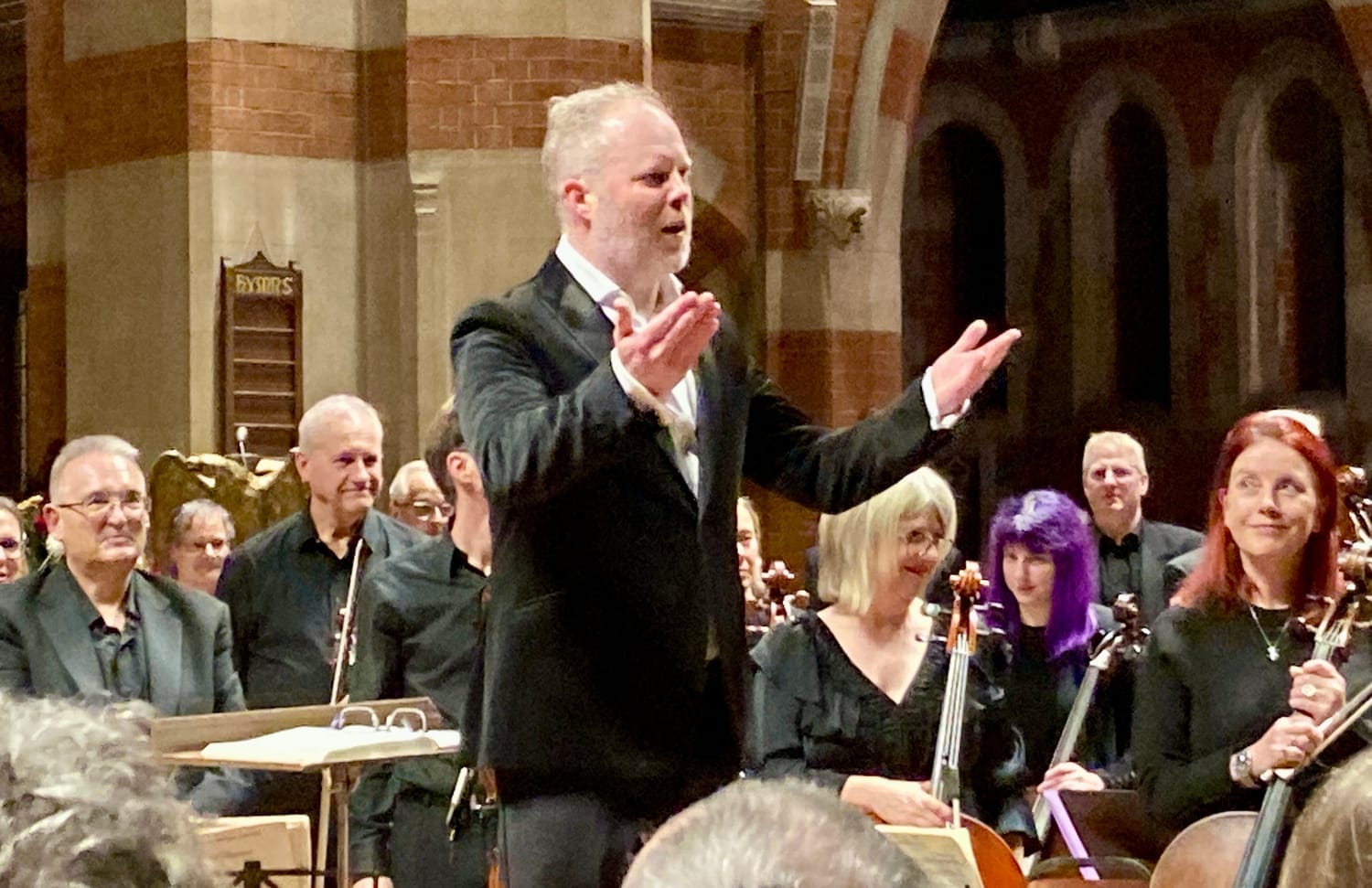
It was indeed a remarkable concert. A traditional structure of overture, concerto, and symphony, played with dedication, commitment, and led with considerable insight, together with a capacity audience giving their full attention, combined to produce an unforgettable occasion.
Although this was my first concert by the Worcestershire Symphony Orchestra, I very much hope it will not be my last. With playing of such attainment and leadership of such insight, I look forward to hearing the orchestra plumb the depths of further great works. They have already performed Elgar’s First Symphony, but perhaps one day we will be treated to their performance of his great and paradoxical Second Symphony, ideally making use of an organ pedal in the final movement - as the composer encouraged when available.
Further information:
Worcestershire Symphony Orchestra - website
LET'S WORK TOGETHER
To get started, please leave your email address and I'll get back to you as soon as possible, and we can discuss your needs in more detail.
We HATE spam. Your email address is 100% secure